
Dishwasher tips that save money aren’t complicated, but most homeowners never learn them because the dishwasher is one of those appliances that gets used daily and thought about rarely. The result is a machine that works adequately but not efficiently.
Dishwasher Tips That Reduce Energy and Water Costs
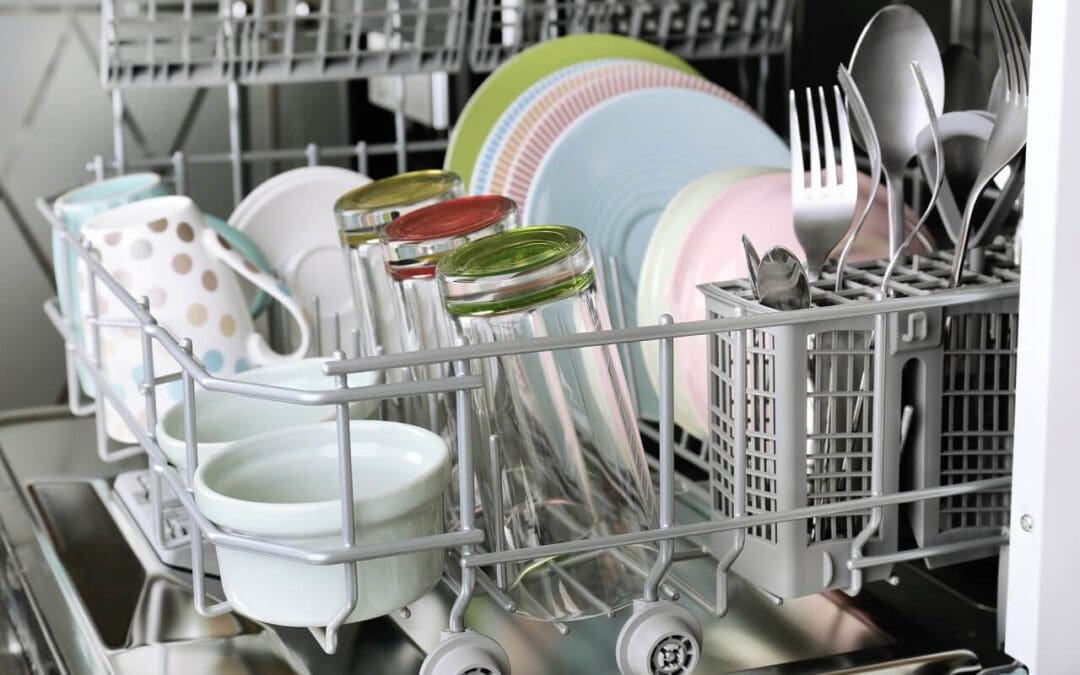
The most fundamental of all dishwasher tips is also the most overlooked: only run the dishwasher when it’s full. A half-full dishwasher uses the same water and energy as a full one. Loading efficiency matters alongside load fullness; dishes that block the spray arms, overlap so water can’t reach all surfaces, or nest together, preventing circulation which produce a poor wash that requires rewashing. Bowls and cups face down, plates angle toward the center spray arm, and nothing blocks the rotation of the spray arms at the bottom of the tub. A correctly loaded full dishwasher uses water and energy once; a poorly loaded one may use them twice.
Dishwasher Tips for Cycle and Temperature
The heated dry cycle is the dishwasher tip with the most immediate energy savings. Heated dry uses a heating element to evaporate moisture after the wash cycle, effective but energy-intensive. Opening the door at the end of the wash cycle and air drying produces the same result at no additional energy cost. Many dishwashers have a dedicated air dry or energy saver setting that does this automatically. Cycle selection is the dishwasher tip most homeowners apply by default rather than intention, running the normal or heavy cycle regardless of what’s in the machine. A lightly soiled load of glasses and plates doesn’t require the same cycle as baked-on casserole dishes. Most dishwashers have a light or quick wash cycle that uses less water and less time for loads that don’t require aggressive cleaning. Matching the cycle to the soil level compounds savings across every load.
Maintenance That Protects Performance and Longevity
A dishwasher that isn’t maintained runs less efficiently and cleans less effectively. Maintenance dishwasher tips aren’t just about the appliance’s longevity; they’re about whether the machine is delivering the clean result that makes running it worthwhile in the first place. The dishwasher filter, a removable screen at the base of the tub that collects food particles, should be cleaned monthly in most households. A clogged filter restricts water circulation, reduces cleaning performance, and forces the machine to work harder than a clean filter requires. Running an empty dishwasher on a hot cycle with a cup of white vinegar placed on the top rack, followed by a light sprinkle of baking soda on the tub floor for a short second cycle, removes mineral deposits, grease buildup, and odor from the interior surfaces without requiring any commercial cleaning product. This monthly maintenance keeps spray arms clear, prevents the scale buildup that reduces water pressure inside the machine, and extends the service life of an appliance that would otherwise accumulate residue until it affects performance.
Frequently Asked Questions (FAQs)
Is it more efficient to hand wash or use the dishwasher for saving money?
For most households, the dishwasher is significantly more water-efficient than hand washing; a full load in a modern Energy Star dishwasher uses considerably less water than washing the equivalent items under a running faucet. Hand washing only becomes more efficient when it involves a basin of standing water rather than a continuously running tap.
How often should I clean my dishwasher filter?
Monthly cleaning is recommended for most households, more frequently with heavy use or when dishes are loaded without scraping food debris. A clogged filter is the most common cause of poor performance that homeowners attribute to detergent or water pressure.
Should I pre-rinse dishes before loading?
Modern dishwashers are designed to handle food residue without pre-rinsing. Scraping solid food debris into the trash before loading is appropriate and prevents filter clogging, but rinsing under running water adds consumption without improving results. Most current detergents contain enzymes that work better when some food residue is present, so pre-rinsing could actually reduce cleaning effectiveness.
What cycle setting saves the most money?
Selecting a light wash or eco cycle for lightly soiled loads reduces the energy the internal heater uses to reach and maintain wash temperature. Using the dishwasher during off-peak hours in areas where utilities charge time-of-use rates is the dishwasher tip that reduces energy cost without changing performance. Air drying instead of heated dry is the single cycle-related change with the most immediate per-load energy savings.
Does loading actually affect how clean the dishes come out?
Yes, loading technique directly affects wash results because cleaning depends entirely on water reaching every dish surface. Items nested together, bowls facing up that fill with water, and anything blocking the spray arms all restrict circulation and leave areas uncleaned. Ensuring the spray arm at the bottom can rotate freely and that no tall item blocks the spray arm beneath the upper rack is the dishwasher tip that most consistently improves first-run results.
KeysInspector provides home inspection services to customers in the southern Florida area. Contact us to request our services.
Recent Comments